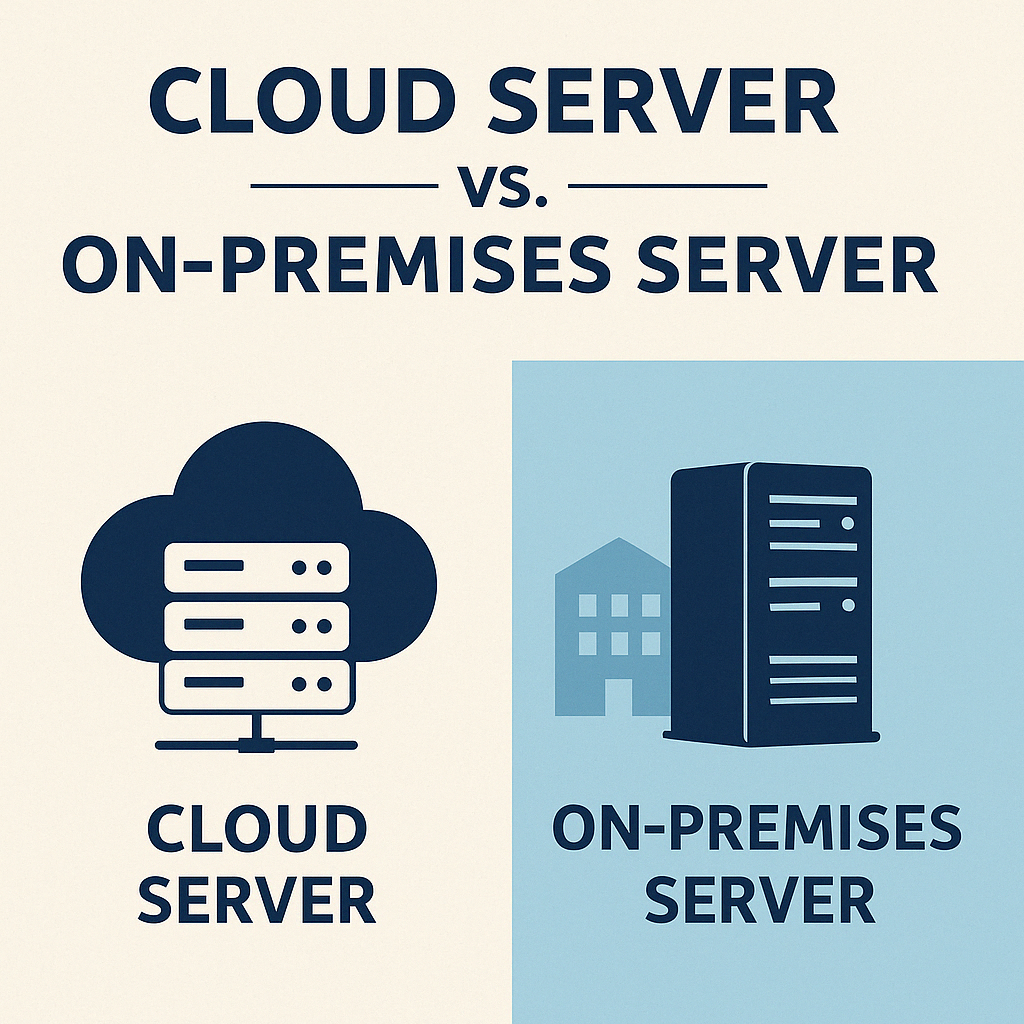
Short version: for most businesses a cloud server (VPS) beats a physical one. It is flexible (change resources with a click), cheaper to run (no power, cooling or maintenance staff), available over 99.95% of the time, secure and reachable from anywhere, and a fixed monthly fee is easy on cash flow. A physical server still fits some cases: regulation that demands full control of data, extreme performance needs, requirements that will stay stable for years, or legacy systems that need special hardware.
Many businesses reach the same dilemma: keep maintaining a physical server, or move to a cloud server? Here we look at the advantages of a cloud virtual server, and at the cases where a physical server may still be the right choice.
What is the difference between a cloud server and a physical server?
- Cloud server (VPS): a virtual server running inside a large cloud infrastructure. You scale its resources up and down quickly and reach it from anywhere in the world.
- Physical server: a server your organisation owns, installed in your office or a dedicated data center. Its resources are fixed, and management and maintenance are up to you.
What are the advantages of a cloud server?
- Flexibility and scalability: scale CPU, RAM and storage up or down as needed. During a campaign or a sudden surge in users, add resources with a click.
- Lower running costs: a physical server needs power, cooling, security, space and maintenance staff. In the cloud, the provider handles all of that.
- Availability and reliability: cloud servers live in secure data centers with redundancy, backups and 24/7 support, and availability above 99.95%.
- Information security: you can add firewalls, intrusion detection and encryption at a level that is hard to reach with a server in the office.
- Operational convenience: access from anywhere at any time, and friendly management tools that let less technical users handle maintenance and updates.
- Financial efficiency: a fixed monthly fee goes into operating expenses, is easy to manage in your cash flow and needs no depreciation of an asset over years.
When is a physical server still worth it?
- Regulation and sensitive data: organisations such as banks and medical institutions may prefer absolute control of their data, and regulation sometimes requires data to stay inside the country or even inside the company.
- Extreme performance and full control: real-time video editing, heavy graphics processing or high-speed financial trading can justify dedicated hardware.
- A long-term investment: when your computing needs are known and stable for years ahead, a one-off purchase can pay off.
- Legacy systems: old software that is not supported in the cloud, or that needs special hardware.
How do you decide what fits your business?
Answer these questions:
- Do you need to change your resources often?
- Do you need instant access to the server from anywhere?
- Do you have staff to maintain servers yourselves?
- Is your business subject to specific regulatory requirements?
- What level of performance and security do you need?
Frequently asked questions
Is a cloud server cheaper than a physical one?
Usually yes, once you count every cost: hardware, power, cooling, space, security and maintenance staff. A physical server may pay off only when needs are stable for many years.
Is a cloud server as secure as one in the office?
Usually more secure. Professional data centers offer firewalls, monitoring, encryption and redundancy that are hard to build in an office.
What about an old system that only runs on a physical server?
It can often run on a cloud virtual server. If it depends on special hardware, you may need to keep it on a physical machine.
Can I combine the two?
Yes. Many businesses move most systems to the cloud and keep on a physical server only what regulation or hardware requires.
Conclusion
A cloud virtual server offers flexibility, efficiency, security and savings, and for most businesses it is the right choice. In specific cases, such as strict regulation, extreme performance or legacy systems, a physical server is still worth considering. Want to check what suits you? The experts at OMC Cloud will gladly help you decide.